COMMERCIAL HAMSTICK ANTENNA BRACKET PROBLEMS
Hamstick hubs are currently available from several manufacturers. After evaluating the different designs, I found that each version has shortcomings that can reduce both transmit and receive efficiency. Two major design problems stand out, along with one important mechanical reliability issue.
1. The feed line shield is tied directly to the hub bracket in some designs
In one common design, only the first antenna element is isolated from the bracket, and connected to the center conductor of the feed line. The second antenna element is connected directly to the metallic bracket that mounts the bracket to the mast. That same bracket also serves as the connection point for the feed line shield. As a result, the metallic bracket is directly bonded to the feed line shield. This may not be a major issue when using a non-metallic mast, but it can create unwanted interactions and losses when a metallic mast or nearby conductive structure is present.
2. Parallel plate construction introduces capacitive shunting losses
In some hubs where both antennas are insulated from the mounting bracket, each antenna is often mounted on its own metal plate. These two plates are positioned parallel to one another, which creates capacitance between them, and can lead to shunting losses. Similar losses are also present in other bracket designs, where the feed line shield is connected to one plate that runs parallel to the hub mounting bracket. In both cases, the geometry of the conductive parts can degrade efficiency.
3. Molded nylon inserts are weak mechanical failure points
Many of the commercial antenna brackets use poor-quality 3/8” x 24 standoffs, with molded nylon inserts. These inserts are well-known failure points. If the antenna is tightened too tightly, the insert can be pulled out of place, allowing the antenna to detach and fall off. This style of construction may be adequate for lighter 250-watt Hamsticks, but it is not reliable enough to safely support the heavier 500-watt versions.
I suspect that the commercial antenna brackets are designed to keep the price as low as possible. To make that possible, the bracket components need to be made up of low priced components, while allowing for quick and easy manufacturing.
CUSTOM MADE HAMSTICK ANTENNA HUBS
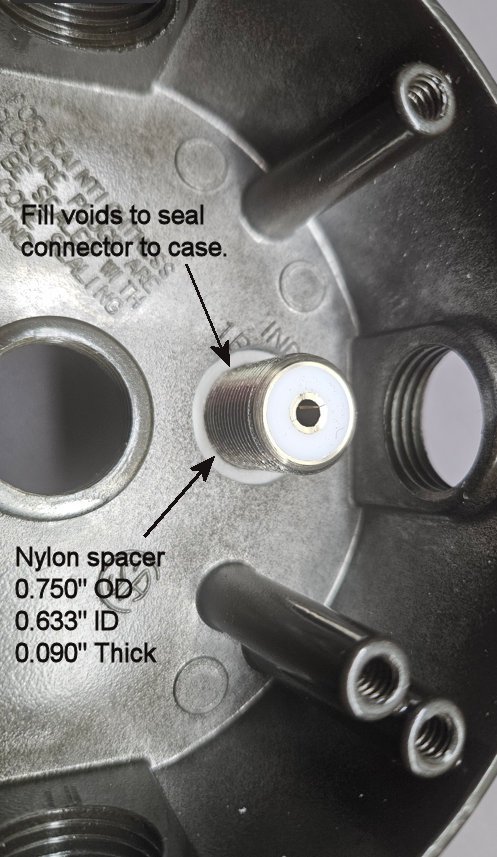
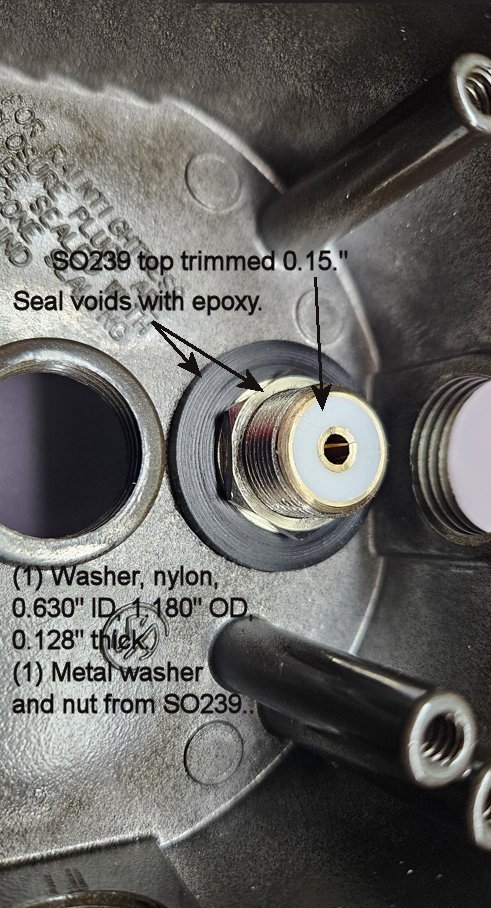
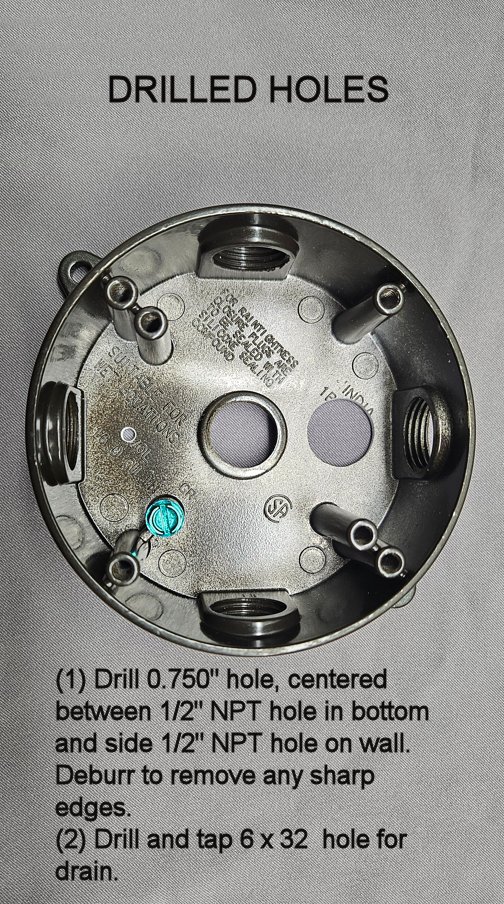
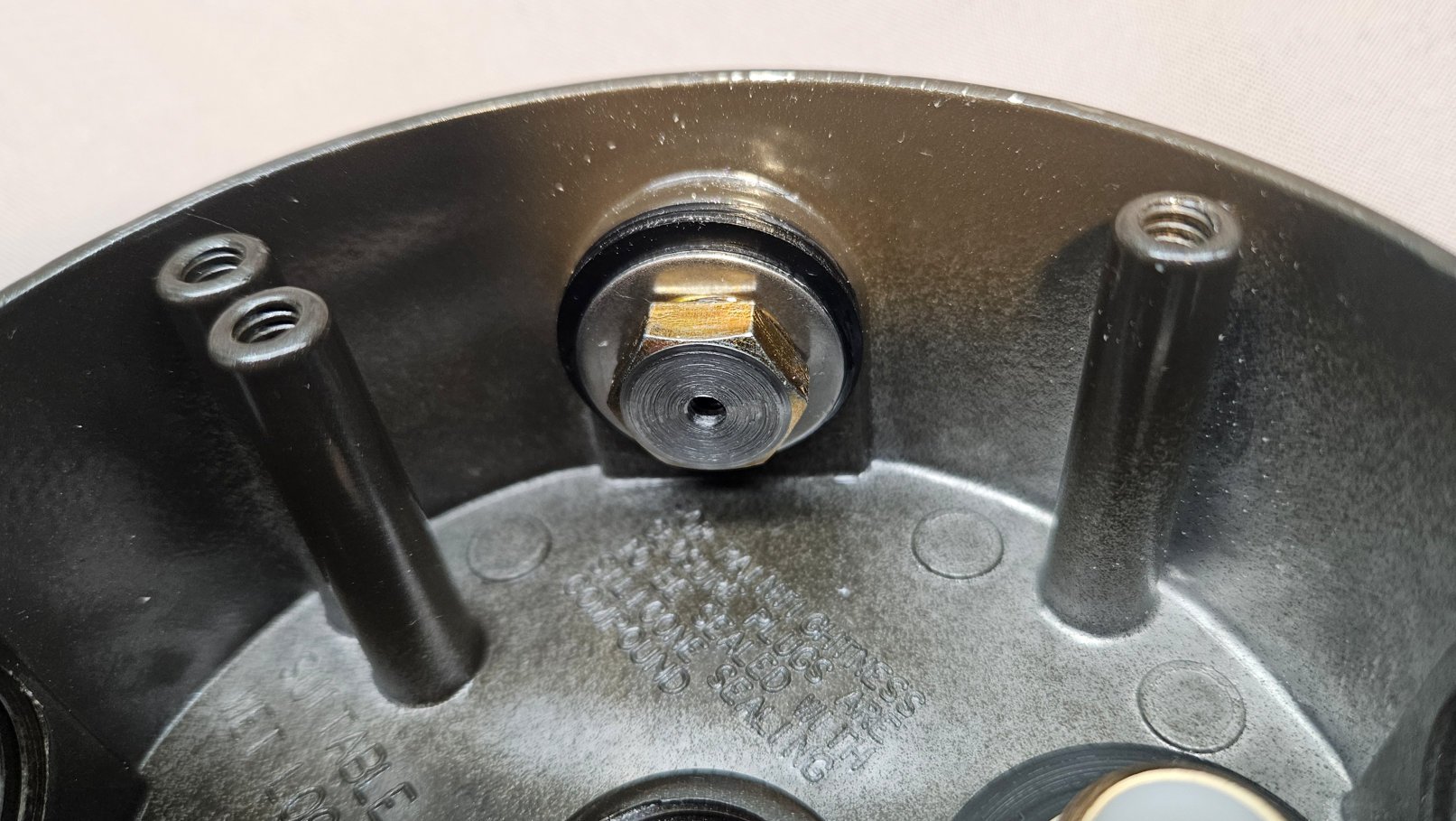
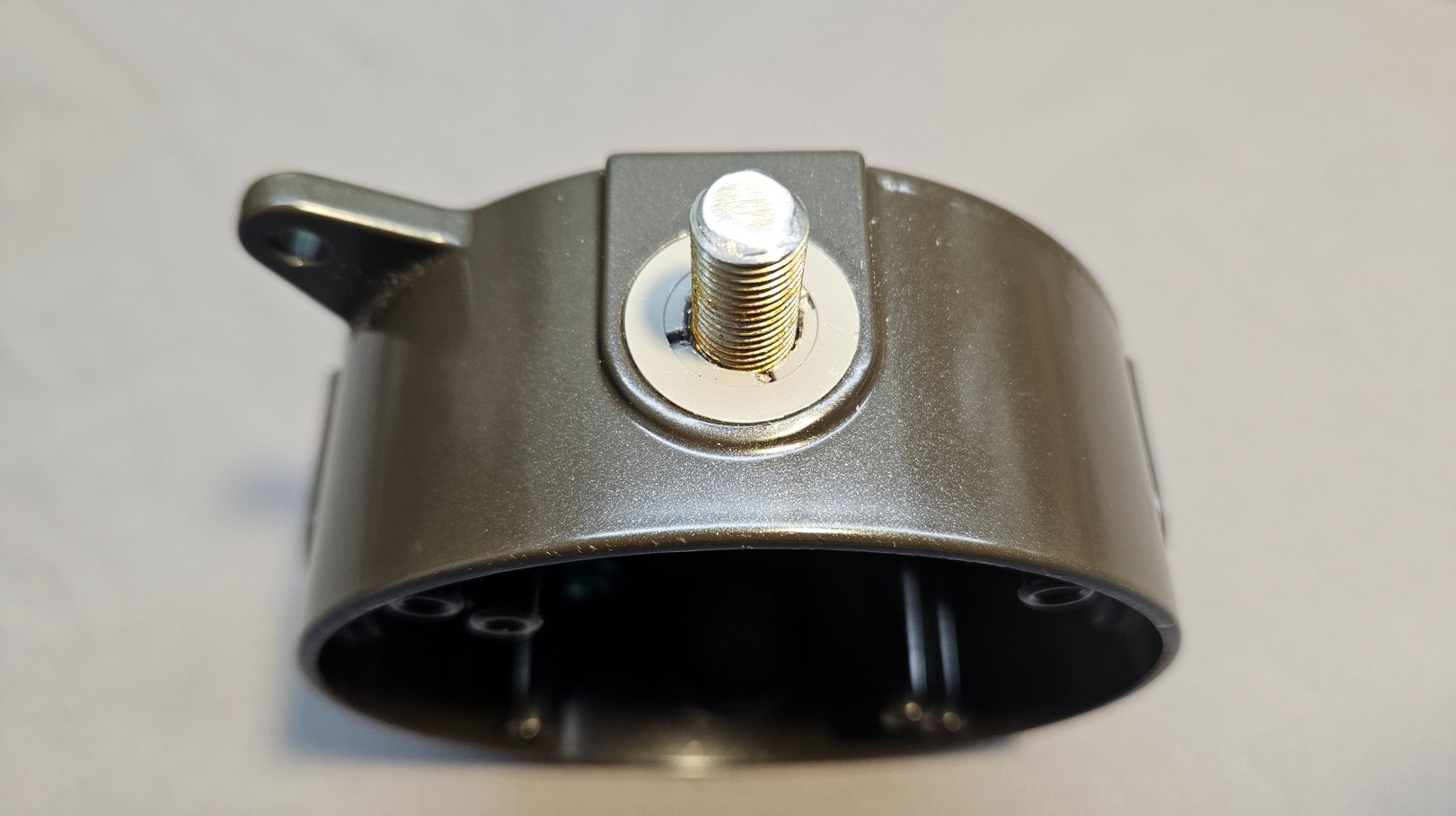
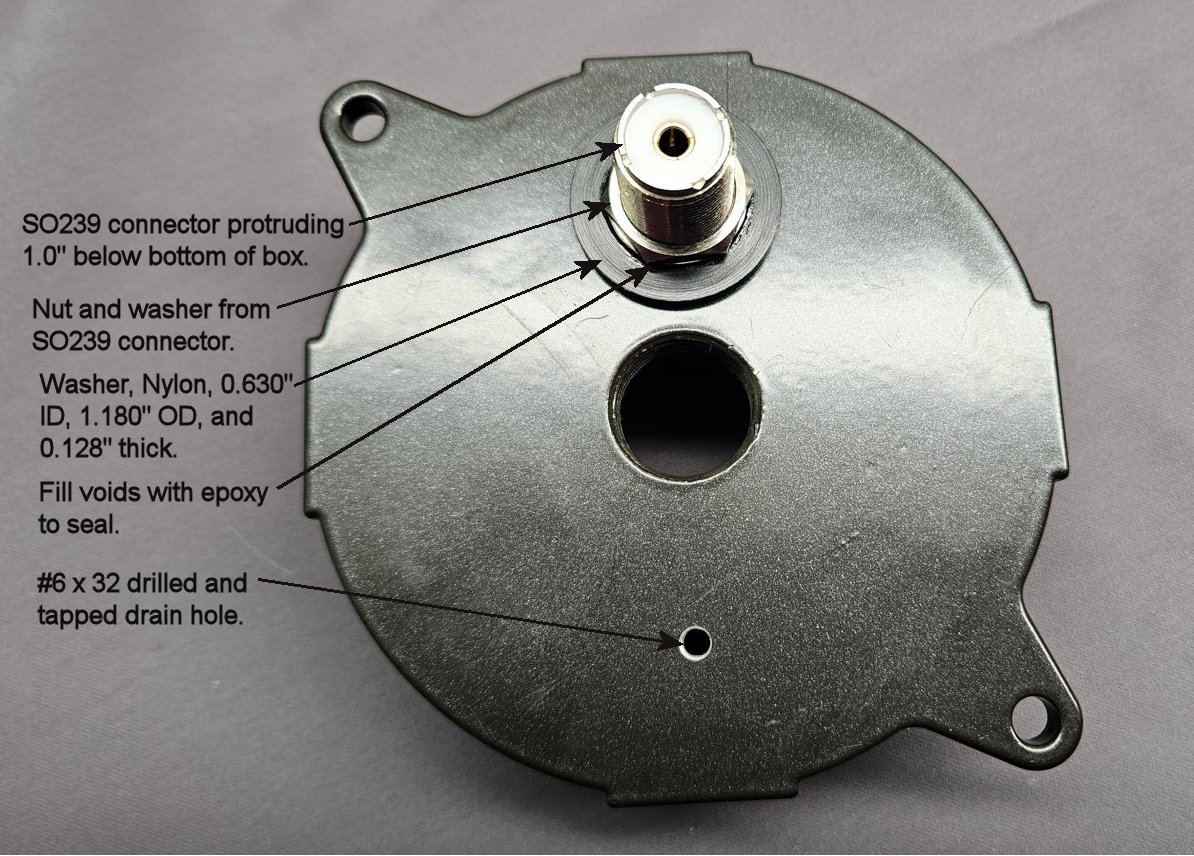
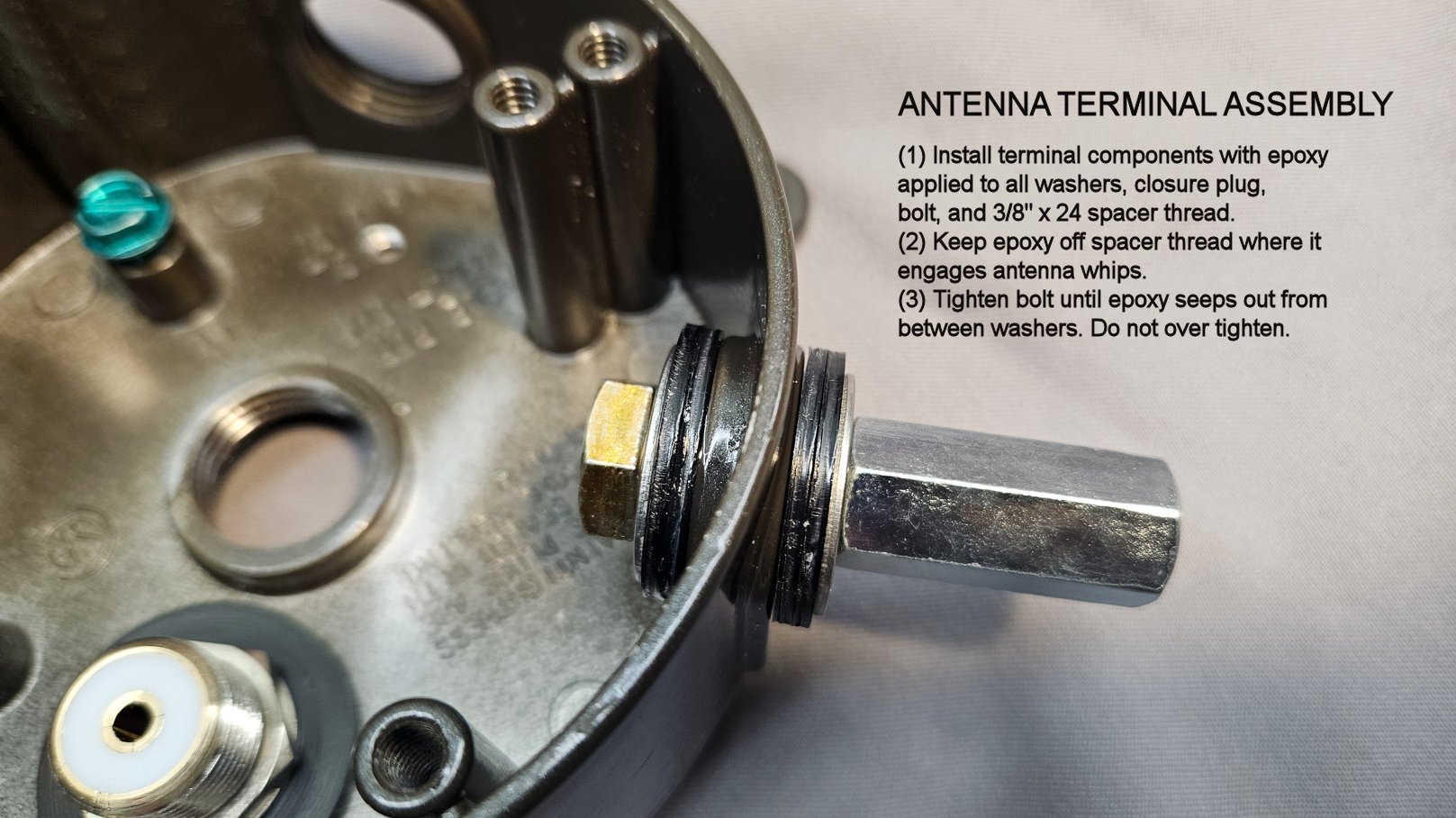
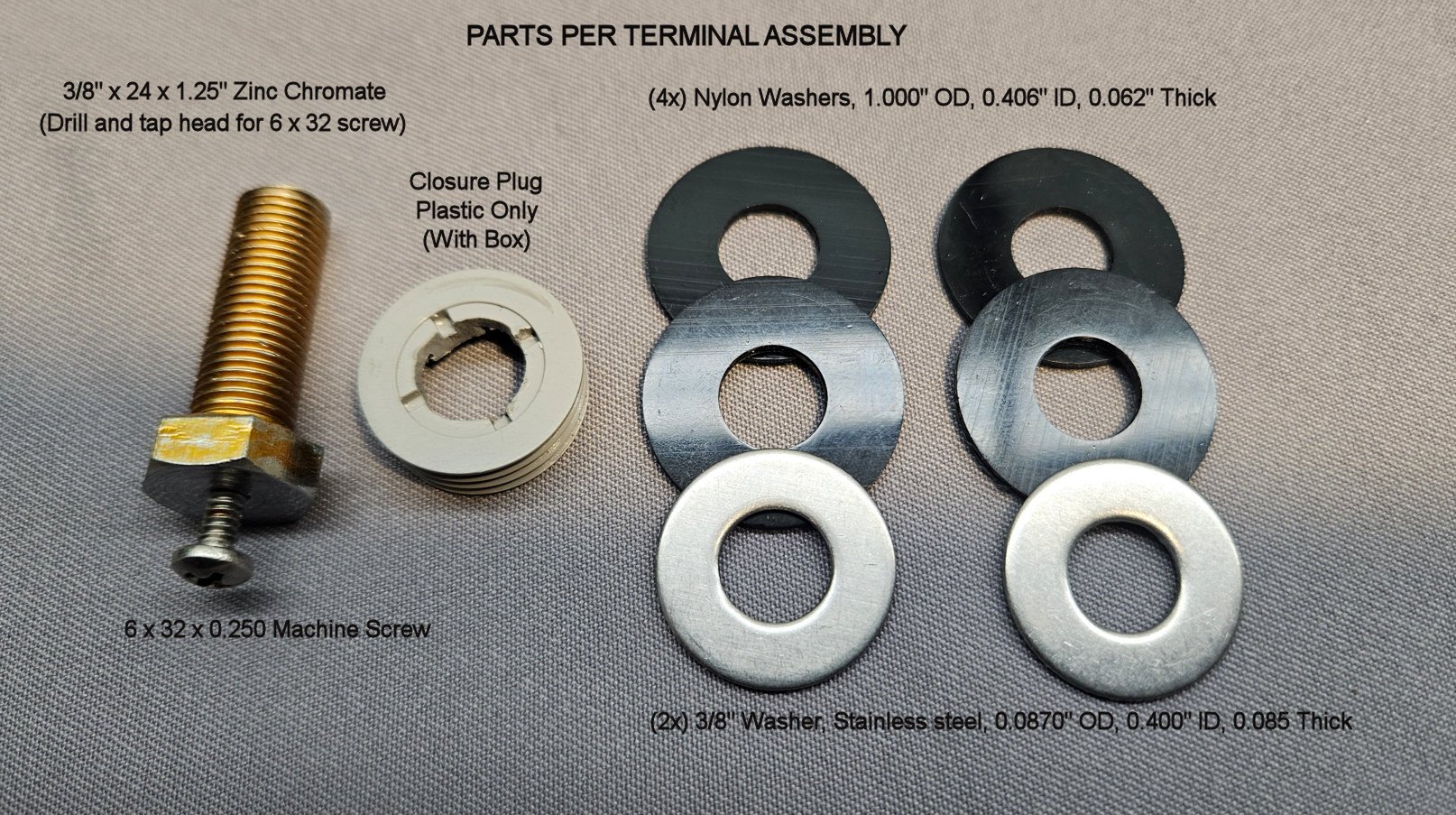
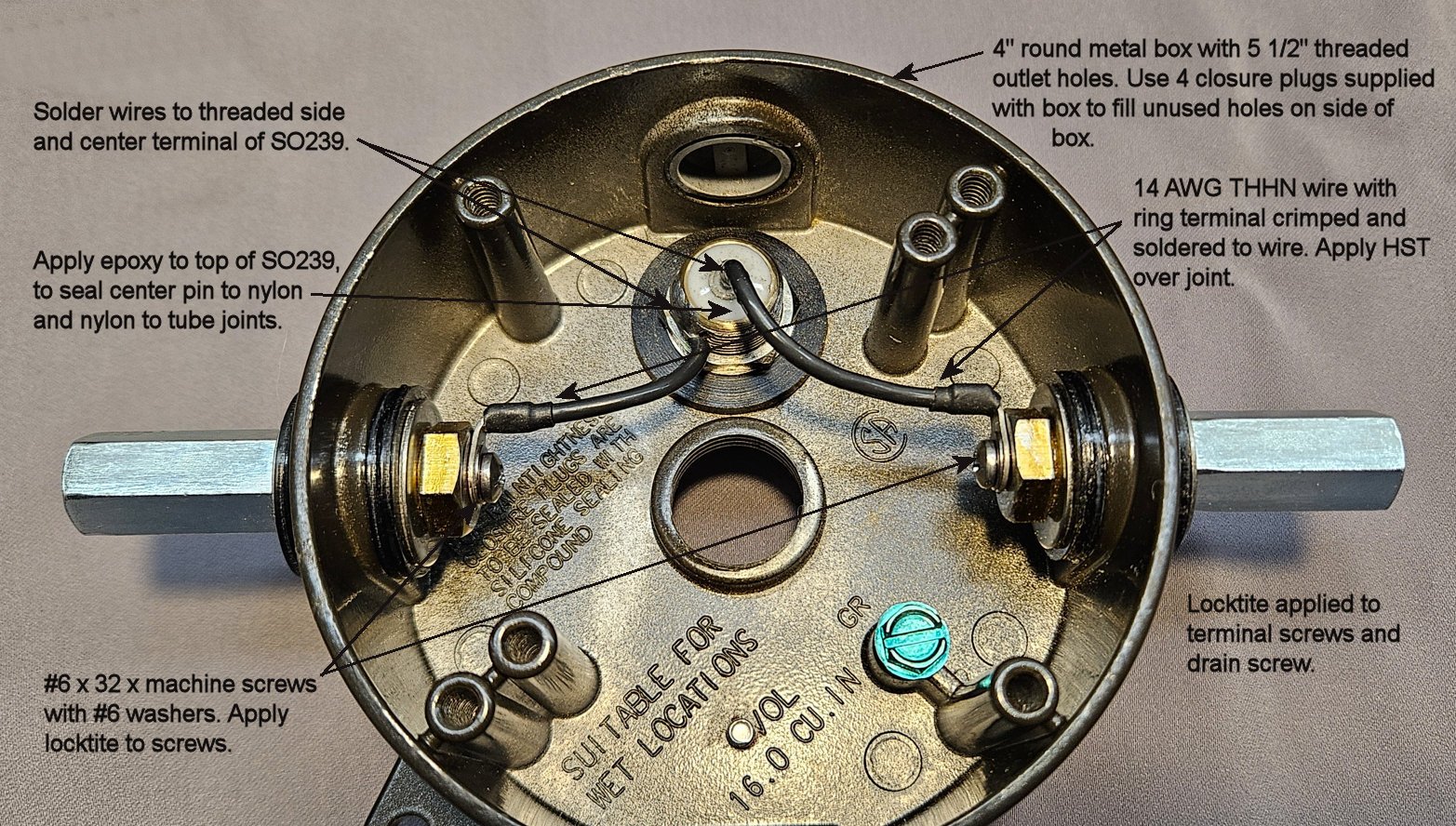
After reviewing the commercial bracket deficiencies, I developed an improved antenna hub. It has lower losses, isolates both antenna elements, and is much stronger. All of the components are available from McMaster Carr, local hardware providers, and ham radio stores. The attached photos document my design. Feel free to build one if it will fill your needs.
This design is very strong, and works well with the heavy weight 500 watt Hamstick antennas. The hole dimensions shown have sufficient spacing to withstand the voltages associated while running 500 watts. It is important to use either epoxy or potting compound in the places where it is called out. This prevents the accumulation of moisture, which could lower the voltage breakdown.
The hub has a ½” NPT mounting hole on the bottom of the box. It may be put up using a grounded metal pipe, or with a PVC ½”NPT to ½” NPT adapter. This adapter will insulate the hub above ground. Make sure that you tune the antenna with the mounting configuration that you will be using.
If the hub will be permanently mounted, I recommend leaving the drain screw out. This will allow the unit to drain, if there is a leak in the cover seal.
DESIGN NOTES
I experimented with several variations.
I rotated the hub of a standard unit. That turned the dipole into a vertical dipole. It seemed to work fairly well, but I didn’t do any long term testing. When this antenna orientation is used, the mounting mast needs to be nonconducting PVC or fiberglass. Placement of the feedline is also important. I tries orienting the coax horizontally for about 15’, which seemed to avoid effecting the antenna’s near field.
Four Hamstick antennas were connected to the hub, using the two unused ½” NPT holes. Physically, the build was easy to do. Electrically, it was a compromise design. The resonant frequencies of the two dipole antennas needed to be different from one another. You need to select which resonant frequencies are compatible, just like you would do when designing fan dipoles. Tuning of each dipole became more difficult, because adjusting one effected the other. I also noted that the SWR of each dipole could not be tuned as low as if only one dipole was present.
I tried adding a vertical Hamstick on the top of the hub. The cover plate needed to be metal, with a ½” NPT hole. The resonant frequency of the dipole and vertical needs to be selected to prevent interference between the two antennas. This also turned out to be a compromise design. I wouldn’t recommend it.